How to Stop Noisy Flocks of Blackbirds from Taking Over Your Trees
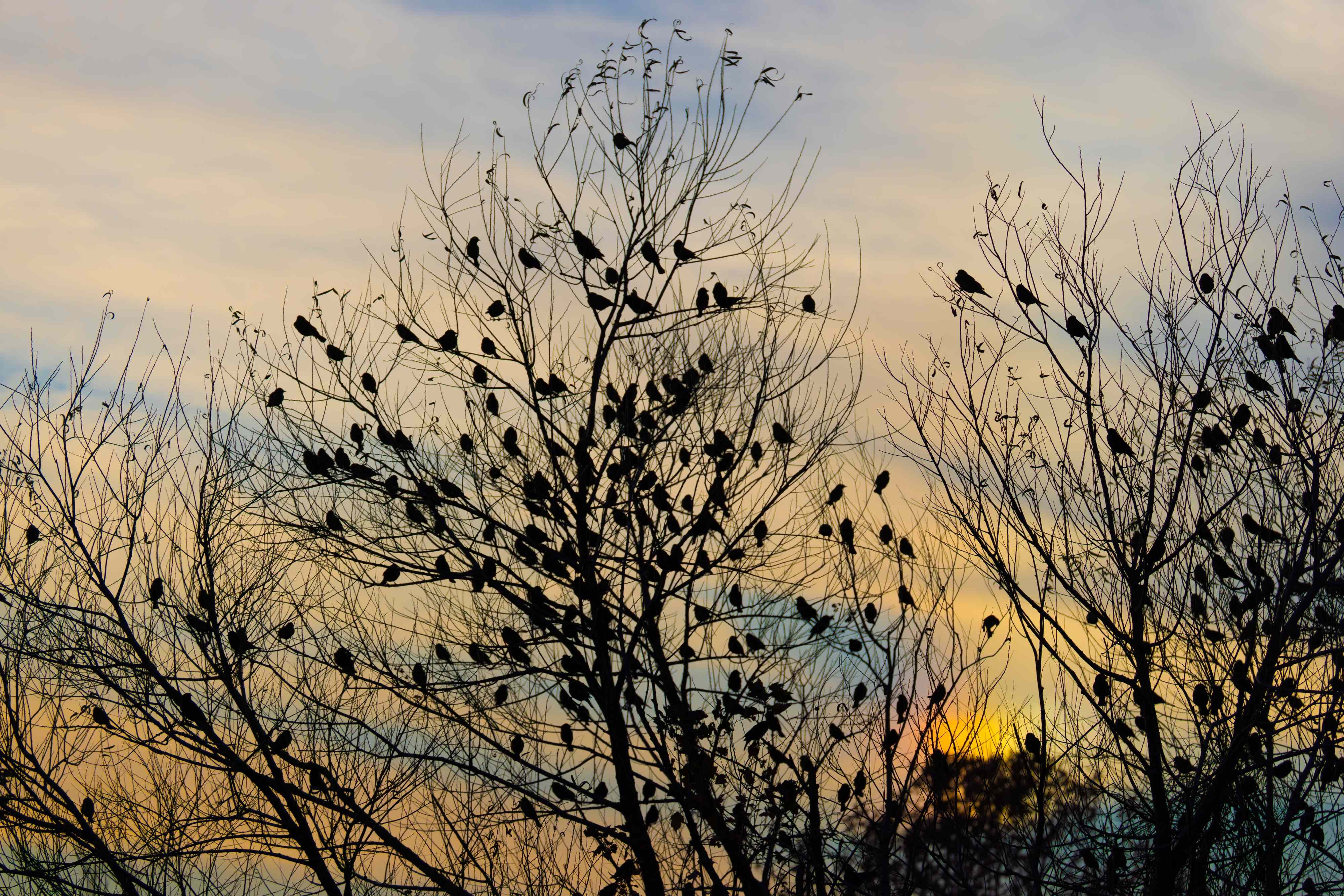
Blackbirds may aggressively dominate bird feeders, leave droppings that pose health risks, and damage crops.
To deter blackbirds, remove or modify feeders, use seeds they dislike, or install feeders designed to exclude them.
Prevent roosting by pruning trees, using visual scare devices, loud noises, and consistently disrupting their roosting habits.
Although bird populations are dropping dramatically worldwide, sometimes birds may show up in large numbers in our yards and that may not always be a welcome event. Among the most undesirable is when blackbirds congregate in trees in the colder months. If flocks of blackbirds are causing issues for you, here’s what you can do to encourage them look for food and shelter elsewhere.
What Are Blackbirds?
Before you try to shoo away the blackbirds that hang out in your trees, it’s important to identify what type of blackbirds they are. The term blackbird is used for several bird species, and the negative rep that these birds have does not apply to all of them.
The most common blackbird in the United States and North America is the red-winged blackbird, whose males are easy to recognize by their bright red shoulder patches with yellow borders. Other common North American blackbirds are the common grackle and the brown-headed cowbird. The common blackbird is native to Europe, Asia, and North Africa. The male has all-black feathers and a bright yellow bill, while the female is brown.
American crows also like to gather in treetops, but they are much larger than blackbirds and their loud, harsh “caw” calls are distinct from the different trills, whistles, and squeaks of blackbirds. The rusty blackbird is one of the most rapidly disappearing North American bird species whose population has dropped by over 90 percent in the past decades, so less likely to be the birds you’re seeing.
Why Blackbirds Can Be a Nuisance
There are different reasons why backyard blackbirds are considered a nuisance.
If you have a bird feeder, you’ll notice that a flock of blackbirds can gobble up all the seeds in no time, leaving no food for smaller birds. Plus, they are quite aggressive and push aside any competitors.
Lots of birds leave lots of droppings behind, which are not only messy and smelly but also pose a risk to human health due to the fungi, bacteria, and parasites in the droppings. One of the diseases caused by bird droppings is histoplasmosis, a respiratory disease caused by a fungus. The fungus survives in the contaminated soil and is transmitted by breathing in the airborne spores when the soil is disturbed.
Blackbirds have the same taste for garden crops as humans; they eat berries, cherries, apples, pears, and grapes, as well as tomatoes, peppers, and sweetcorn. They also eat any seeds that are close to the soil surface, so if you get low germination, blackbirds may be to blame.
How to Deter Blackbirds
The two main approaches to deterring blackbirds are to limit food sources and to make your yard less welcoming for roosting.
Temporarily Empty Bird Feeders
Either remove all the bird feeders in your yard or totally empty them and leave them that way for at least five days. Once blackbirds no longer find food, they will move on.
Only Offer Undesirable Food
Blackbirds have their preferred foods, and safflower and nyjer seeds are not among them. Fill your bird feeder(s) only with those seeds which will still be eaten by other birds like cardinals and finches.
Block Access to Bird Feeders
There are different ways to keep blackbirds out of bird feeders. One is to place metal wire cages with openings of 2 inches or less around feeders; this will still let small birds pass through.
Another option is to make the perches on tube feeders so short that blackbirds cannot fit on them or remove the perches completely. You might also want to consider using a bird feeder with a spring-loaded perch that shuts off the ports when a squirrel or a heavy bird like a blackbird lands on it.
Unlike smaller birds, blackbirds and other large birds have trouble feeding upside down, so installing upside-down feeders is another good option.
Install Visual Scare Devices
To deter flocks from roosting, put up visual scare devices such as holographic flash tape, reflective spinners, or helium-filled mylar balloons in trees and other places where they tend to gather for the night.
Put up Noise Deterrents
Sharp, loud sounds, such as banging metal can lids, are an easy deterrent. If that doesn’t work, notch it up by broadcasting recorded bird distress calls. The timing is key here. Start the loud noises as the flocks arrive to roost and continue until it gets dark. If the birds take up their nighttime resting position despite your efforts, stop the noise and restart the next day. It may take up to a week before the birds stop roosting in your trees.
Prune Trees
Making trees less inviting by pruning them is also an option. A canopy that is open and airy offers less shelter and protection to the birds.
on Better Homes & Gardens
Source: Nature
